Showing posts with label Nayyar Hashmey. Show all posts

Monday, July 9, 2012

Friends Not, Masters [1 of 2]


by Nayyar Hashmey


I already uploaded two posts on the shameful agreeemnt our awami hakoomat has made with the US on reopening transit facilities for NATO and ISAF forces in Afghanistan. As I put up the third one of this series, this time by Humayun Gauhar, I recall the two  posts I earlier had on my WordPress blog, titled: Pakistan ‘trashed’ and insulted, Kayani won’t meet US official (hereand Clinton’s $33m raid on Pakistan shows that, in the end, hypocrisy will win (here

Sunday, November 21, 2010

Do The Unthinkable!


DO THE UNTHINKBLE NOW

Nayyar Hashmey


IN THE FOLLOWING POST, Dr. Haider Mehdi raises some very pertinent points. Points that concern our current economic, administrative and social malaise. He suggests also a solution to fight the malaise

His write-up is unique in concept insofar as we have lot of thinkers and analysts, who day and night discuss our problems, our ailments and crises but never do they ever venture to suggest a solution. Dr. Mehdi’s analysis is different from them; he suggests a route, a guiding path, a solution for resurrecting the nation from its hapless situation. If the people [and there is a big IF] who have power could take some time to think over what Dr. Mehdi says, perhaps some change we could see in the sad state of our state of Pakistan.
Coming to some points mentioned by Dr. Mehdi particularly when he mentions the example of a Chinese lady working in Dubai - an individualistic skilled approach of a one woman enterprise who though is not very rich but at least is a self employed, self reliant and quite happy lady with her enterprise. And this is what makes nations strong.

Its interesting that what Dr. Mehdi mentions in his post, makes me recall my own assessments of the situation that once prevailed in the Peoples Republic of China when the republic was being led by its great fathers like Mao-Zedong and Zhou Enlai. Those were the days when ideological strife between the USSR and the P.R. was at its peak. The Chinese were blaming the Soviets for having adopted the course of revisionism whereas they themselves took pride in Leninism Marxism. Majority of young folk in those days thought the Chinese as extremists and the Russians more pragmatists. But I was of the opinion that behind the Chinese extremism there is a certain rationale. They were modernizing their industries, their military and their social structure and a massive overhaul was underway in almost every sphere, every aspect of life. 


In that massive overhaul certain excesses were indeed indulged into but by and large China kept this overhaul at a swift pace. The country started asserting its role. Exit the Maoists. Enter Deng Xiaoping and his team of liberal communists. China continued on its path of industrialization, not towing the line of the Russians, not towing the line of America but a pure Chinese approach toward the great reformation of Chinese society. 


We used to read a lot of media stuff about China then, the wrongs being committed, the people suffering under Chinese Communism and a lot of the dis- and misinformation the western propaganda mills were churning out against the Chinese. But the Chinese did not blink. They continued their path, the Chinese concept of handling things. Result? From a poverty ridden economy and an opium addicted nation, China emerged finally as a power to be reckoned with. The opium addicted Chinese of yesteryears started lending money to the world’s mightiest nation on earth.


I recall again my session with a Chinese visitor I had during the days I was associated with a US multinational. The Chinese friend told me we Pakistanis made a blunder in our agricultural planning. I was surprised. What blunder? I asked. So said the Chinese guest. See you are seeking collaboration to develop your agriculture and whom do you take as your guide, your consultant. The Americans. They are highly developed in agriculture no doubt . But don’t forget, they would never want you to develop your agriculture to an extent that they have no markets to sell their products or services, that instead of their customer they should turn you  into their own competition! 


If you do wish to develop your agriculture, your industry or your general economy, you should better seek collaboration with a developing country [like China] because we too have similar problems and similar endeavors. Both of us need to develop. If we progress, so shall you. If you do, so shall we. But as far as United States is concerned, they are already too developed, so why should they be interested in your development and self reliance. A simple logic but it did carry a weight. Alas! our leaders always took US as the only source to seek light from. Light they did take but plunged this country into darkness.


US is a great county indeed. Its forefathers were the source of light that beckoned the whole world once. A man like Abraham Lincoln was one such light. I love that man, he has always been my role model ever since my childhood days. But our leaders never ever did want to emulate the man, the source of light, the source of wisdom and a political philosophy to follow. Instead they took US  bosses of the like of Bush as their models whom they obeyed and obey they did blindly. Instead of going for innovation, perseverance and a goal oriented enterprise, the hallmark of US entrepreneurship; they went for a simple solution. Make the state a tool to extract as much funds as possible to fatten the family coffers. 


Of all the leaders we had in this category, the worst case was of our former Chief Martial Law Administrator-cum-Chief Executive-cum COAS-Cum-President-cum Everything. Unfortunately Mr. Asif Ali Zardari too did prove, he is no less inferior in wandering with a begging bowl than his erstwhile predecessor and dictator Pervez Musharraf.


To come out of the abyss, we have been thrown in, the guidelines provided by Dr. Mehdi are words in earnest. Read his write up and see how correct his analysis is. Its particularly so for our policy makers who should read this first of all.


“ Shayad ke uttar jaey dill main unke yahi baat”


Continued...http://wondersofpakistan.blogspot.com/2010/11/do-unthinkble-now-by-dr.html


YOUR COMMENT IS IMPORTANT
DO NOT UNDERESTIMATE THE POWER OF YOUR COMMENT
Wonders of Pakistan supports freedom of expression and this commitment extends to our readers as well. Constraints however, apply in case of a violation of WoP Comments Policy. We also moderate hate speech, libel and gratuitous insults.


Thursday, November 11, 2010

PAKISTAN AND INDIA UNDER THE NUCLEAR SHADOW page 3 of 3


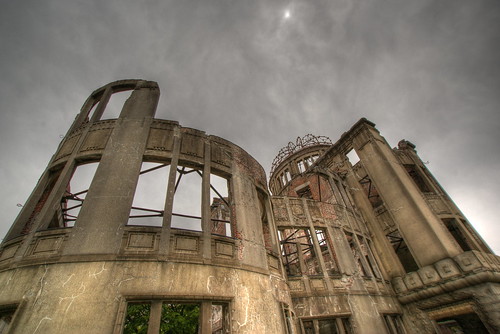
The building above is called the Atomic Bomb Dome, and it’s on World Heritage List.  At the time of the bombing at 8:15am on 6 August 1945, it was the pride and joy of Hiroshima, a beautifully designed regional trade hall.  The A-bomb exploded 600 meters almost directly above.  Since the incredible pressure and blast came from directly overhead, it was one of the few buildings to stay standing within two kilometers.  All the occupants of the building were instantly killed by the intense heat, along with 80,000 in the surrounding area.  By the end of 1945, 140, 000 would be dead.


INDIA AND PAKISTAN
THE NUCLEAR SHADOW


I tried. It was all a nightmare - my wounds, the darkness, the road ahead. My movements were ever so slow; only my mind was running at top speed.

In time I came to an open space where the houses had been removed to make a fire lane. Through the dim light I could make out ahead of me the hazy outlines of the Communications Bureau's big concrete building, and beyond it the hospital. My spirits rose because I knew that now someone would find me; and if I should die, at least my body would be found. I paused to rest. Gradually things around me came into focus.


Wednesday, November 10, 2010

PAKISTAN AND INDIA UNDER THE NUCLEAR SHADOW page 2 of 3


A girl prays for the atomic bomb victims in the Peace Memorial Park in Hiroshima, Japan August 5, 2007 as the city marked the 62nd anniversary of the world's first atomic bombing on August 6, 1945. Photo Reuters


INDIA AND PAKISTAN 
THE NUCLEAR SHADOW


I have taken these paragraphs mainly from a book by Dr. Ch. Jamil Anwar. The book is titled ‘Atom Bomb: The Concept and Reality’. The book intends to trace down the history of atom bomb. I wonder how Dr. Jamil has been able to describe a purely scientific matter in such an elucidating, full of interest and sensational style that even I, a student of Urdu literature was so completely absorbed in the book. I didn’t leave the book till such time that I had finished it from beginning to end.
But the particular part of the book that completely gripped me, was the one where the author describes the story of barbarism committed by the modern day hero of global war on terror, the United States of America, a hero that turns hundreds and thousands of innocent persons in the two Japanese cities into mere ash and then ‘celebrates’ this ‘men into ashes’ festivity, a festivity that makes one’s skins to crawl.
The author deserves credit for his moving style. While reading his book I felt as if I was myself a witness to this most tragic, most barbaric act in human history. His style of describing things is so absorbing that I felt I was Dr. Michihiko Hachiya myself who surprisingly came alive from the inferno called Hiroshima.

What happened to Dr. Michihiko let’s listen from his own mouth:

I have taken these paragraphs mainly from a book by Dr. Ch. Jamil Anwar. The book is titled ‘Atom Bomb: The Concept and Reality’. The book intends to trace down the history of atom bomb. I wonder how Dr. Jamil has been able to describe a purely scientific matter in such an elucidating, full of interest and sensational style that even I, a student of Urdu literature was so completely absorbed in the book. I didn’t leave the book till such time that I had finished it from beginning to end.
But the particular part of the book that completely gripped me, was the one where the author describes the story of barbarism committed by the modern day hero of global war on terror, the United States of America, a hero that turns hundreds and thousands of innocent persons in the two Japanese cities into mere ash and then ‘celebrates’ this ‘men into ashes’ festivity, a festivity that makes one’s skin to crawl.
The author deserves credit for his moving style.
While reading his book I felt as if I was myself a witness to this most tragic, most barbaric act in human history. His style of describing things is so absorbing that I felt I was Dr. Michihiko myself who surprisingly came alive from the inferno called Hiroshima.
What happened to Dr. Michihiko let’s listen from his own mouth:

Suddenly, a strong flash of light...

"The hour was early; the morning still, warm, and beautiful. Shimmering leaves, reflecting sunlight from a cloudless sky, made a pleasant contrast with shadows in my garden as I gazed absently through wide-flung doors opening to the south.

Clad in drawers and undershirt, I was sprawled on the living room floor exhausted because I had just spent a sleepless night on duty as an air warden in my hospital.
Suddenly, a strong flash of light startled me - and then another. So well does one recall little things that I remember vividly how a stone lantern in the garden became brilliantly lit and I debated whether this light was caused by a magnesium flare or sparks from a passing trolley.
Garden shadows disappeared. The view where a moment before had been so bright and sunny was now dark and hazy. Through swirling dust I could barely discern a wooden column that had supported one comer of my house. It was leaning crazily and the roof sagged dangerously.

Moving instinctively, I tried to escape, but rubble and fallen timbers barred the way. By picking my way cautiously I managed to reach the roka [an outside hallway] and stepped down into my garden. A profound weakness overcame me, so I stopped to regain my strength. To my surprise I discovered that I was completely naked How odd! Where were my drawers and undershirt?

What had happened?

All over the right side of my body I was cut and bleeding. A large splinter was protruding from a mangled wound in my thigh, and something warm trickled into my mouth. My cheek was torn, I discovered as I felt it gingerly, with the lower lip laid wide open. Embedded in my neck was a sizable fragment of glass which I matter-of-factly dislodged, and with the detachment of one stunned and shocked I studied it and my blood-stained hand.

Where was my wife?

Suddenly thoroughly alarmed, I began to yell for her: 'Yaeko-san! Yaeko-san! Where are you?' Blood began to spurt. Had my carotid artery been cut? Would I bleed to death? Frightened and irrational, I called out again 'It's a five-hundred-ton bomb! Yaeko-san, where are you? A five- hundred-ton bomb has fallen!'

Yaeko-san, pale and frightened, her clothes torn and blood stained, emerged from the ruins of our house holding her elbow. Seeing her, I was reassured. My own panic assuaged, I tried to reassure her.
'We'll be all right,' I exclaimed. 'Only let's get out of here as fast as we can.'

She nodded, and I motioned for her to follow me."

It was all a nightmare...

Dr. Hachiya and his wife make there way to the street. As the homes around them collapse, they realize they must move on, and begin their journey to the hospital a few hundred yards away.

After the Blast
"We started out, but after twenty or thirty steps I had to stop. My breath became short, my heart pounded, and my legs gave way under me. An overpowering thirst seized me and I begged Yaeko-san to find me some water. But there was no water to be found. After a little my strength somewhat returned and we were able to go on.

I was still naked, and although I did not feel the least bit of shame, I was disturbed to realize that modesty had deserted me. On rounding a corner we came upon a soldier standing idly in the street. He had a towel draped across his shoulder, and I asked if he would give it to me to cover my nakedness. The soldier surrendered the towel quite willingly but said not a word. A little later I lost the towel, and Yaeko-san took off her apron and tied it around my loins.

Our progress towards the hospital was interminably slow, until finally, my legs, stiff from drying blood, refused to carry me farther. The strength, even the will, to go on deserted me, so I told my wife, who was almost as badly hurt as I, to go on alone. This she objected to, but there was no choice. She had to go ahead and try to find someone to come back for me.

Yaeko-san looked into my face for a moment, and then, without saying a word, turned away and began running towards the hospital. Once, she looked back and waved and in a moment she was swallowed up in the gloom. It was quite dark now, and with my wife gone, a feeling of dreadful loneliness overcame me.

I must have gone out of my head lying there in the road because the next thing I recall was discovering that the clot on my thigh had been dislodged and blood was again spurting from the wound.

I pressed my hand to the bleeding area and after a while the bleeding stopped and I felt better

Could I go on?
_____ 


Contd..
Page 1 2 3 Next 


YOUR COMMENT IS IMPORTANT
DO NOT UNDERESTIMATE THE POWER OF YOUR COMMENT
Wonders of Pakistan supports freedom of expression and this commitment extends to our readers as well. Constraints however, apply in case of a violation of WoP Comments Policy. We also moderate hate 


Pakistan and India under the Nuclear Shadow page 1 of 3


INDIA AND PAKISTAN
THE NUCLEAR SHADOW

Note for WoP readers: My current post is based on a column in Urdu. The writer has been one of those op-editors of a daily whom I have been reading since my youth. [In those days he used to write for Nawai Waqt which was the leading Urdu daily in this part of Pakistan. I don’t know how does it rank now vis-à-vis Jang but in those days it was the leading daily indeed]. Ever since I started reading his first column in Nawai Waqt I almost got addicted to it. In particular what I always loved in his writing has been his style especially for the Punjabi words which he incorporates so beautifully in his “salees” Urdu that they almost become natural part of his Urdu writings. Another aspect which endears me to his columns is that special touch of humor he so articulately puts into his writing.  Nowadays when we mostly read almost every other day news on drone bombings, suicide attacks, load shedding, sugar shortages and other such horrible things, he brings us every morning  something which sometimes makes you smile and many time makes you burst into a laughter.
But his present column is quite opposite to what he normally writes. It’s a very serious and indeed a highly dangerous matter too. However, instead of me taking you further into what he thinks on this, I would suggest you directly reach his column and think again some thing. [See for yourself], is it really that unthinkable? [Nayyar]

Ata-ul-Haq Qami is a noted Urdu columnist. In one of his recent column, he writes:
“Its 6th of August 1945. After a successful bombing of Japanese industrial city and a principal military town [Hiroshima] Enola Gay has safely landed at the Tinian airbase. A large gathering has assembled to greet the plane crew. Included in the gathering are Gen.’s Spaatz and Lemay.
Right: Bust of Gen.Carl Andrew Spaatz, the US General and the first Chief of Staff of the United States Air Force. (Source: Wikipedia 
On 11th of March, 1945 Spaatz assumed command of the U.S. Strategic Air Forces in the Pacific as part of the Pacific Theatre of Operations. It was from this command, in July 1945 that Spaatz directed the strategic bombing of Japan, including the atomic bombing of Hiroshima and Nagasaki.
       
Curtis Emerson LeMay was also a general of the United States Air Force. He is credited with designing and implementing an effective, but also controversial, systematic strategic bombing campaign in the Pacific theater of World War II. During the war, he was known for planning and executing a massive bombing campaign against cities in Japan. After war, he reorganized the Strategic Air Command (SAC) into an instrument of nuclear war Source: Wikipedia 
A ceremony is held to celebrate the successful attack on Hiroshima. Col Paul Tibbets who led the Gay mission and piloted the plane is decorated with a medal. Gen. Spaatz eulogizes the services of the Gay crew. President Harry S. Truman who is on board the USS Augusta on his way from Potsdam to Washington gets the news while on ship. The president speaks to sailors. His face is gleaming with joy. “We should reach America as soon as possible. This is a great moment in history”, says the president.
The president was of course right, for prior to Hiroshima bombing, the history never had seen such a ‘great’ moment in history; of wanton barbarism on humanity on such a vast scale.

The same evening the White House issued a press release which described the making of the atom bomb as a great success in the history and that it was the US that had achieved that unique and solitary success. The first bomb had been dropped on a Japanese city Hiroshima. Now if Japan didn’t surrender, said the press release, it would face a rain of ruin from the skies that would have no parallel in history.

Let us see now how this day the 6th of August, 1945 the city looked like:
The sun rose into a clear blue sky over the city of Hiroshima, promising a warm and pleasant day. Nothing in the day's dawning indicated that this day would be any different from its predecessors. But this day would be different, very different. This day would change the world. On this day a single bomb dropped by a single airplane would destroy the city, leading to the end of World War II and introducing mankind to the Atomic Age.
At 8:15 a.m. local time, the Enola Gay dropped Little Boy onto Hiroshima. Just 43 seconds later it exploded 1,900 feet above the city.Then the brilliant morning sunlight was slashed by a more brilliant white flash.From the men who had rung up the curtain on a new era in history burst nothing more original than an awed ‘My God!,’” wrote Time.

Nearly five square miles, over 60 percent of the developed city, was destroyed. “All around, I found dead and wounded,” described one Japanese official. “Some were bloated and scorched—such an awesome sight, their legs and bodies stripped of clothes and burned with a huge blister. All green vegetation, from grasses to trees, perished in that period.”
“I cannot bear to see my innocent people suffer any longer,” declared Emperor Hirohito before the Japanese Supreme Council. “Ending the war is the only way to restore world peace and to relieve the nation from the terrible distress with which it is burdened.”
Continued...Page 2 3 Next

YOUR COMMENT IS IMPORTANT
DO NOT UNDERESTIMATE THE POWER OF YOUR COMMENT
Wonders of Pakistan supports freedom of expression and this commitment extends to our readers as well. Constraints however, apply in case of a violation of WoP Comments Policy. We also moderate hate

Thursday, November 27, 2008

CAN INDIA AND PAKISTAN LIVE IN PEACE


by Nayyar Hashmey

Hinduism in Pakistan is viewed more in a political sense than religious, an approach that has turned both Islam and Hinduism into adversaries. The politicization of two great faiths in the subcontinent is goaded in the pages of history ever since partition of India and beyond. The Afghan King Mahmud of Ghazni in Pakistan is acclaimed more as a hero than a foreign intruder. His famous saying to Hindu priests while plundering the wealth of Somnath, when the former offered him as much money and gold as he wished but to spare the idols kept in the temple. To their appeal quipped Mahmud, “Am a destroyer and not dealer of idols”. This slogan for a long time after creation of Pakistan has been a rallying cry for the Pakistanis to develop a wave of hate against Hinduism.

While delving into this particular part of history, I came to observe that Mahmud though a Muslim was not the monarch who was determined to destroy Hinduism or spread Islam, like typical imperialist he accepted retributions from conquered peoples and then went back to Ghazni in Afghanistan. The basic aim of Mahmud like any other ruler of the ilk was to retain the largest piece from the cake, the “Gold Bird” called India (here India is synonymous with the South Asian subcontinent). Had he been a Mujahid as most of our Pakistani writers portray and believe, he should have tried to convert Hindus to the fold of Islam, which he did not – not because he was a liberal Muslim but because of his desire to amass the Indian wealth and expand his empire. Like most of the rulers who invaded the subcontinent, he either accepted reparations from Hindu rulers in the subcontinent or demanded abject obedience; in other words slavish statehood for the conquered people and the lands.


Contrary to Mahmud and quite ironically the local Muslim rulers who established themselves 
in the soil of this subcontinent like certain Afghan and Mughal rulers in the later day periods, the sad fact of history is that the Hindu’s too never accepted even those local Muslim rulers as their own (vis-à-vis the Hindu rulers) a very sad fact indeed, which created a wedge between the Hindus and the Muslims as separate and distinct identities. Then there were incidents in history like Shiva ji stabbing Afzal Khan in the back while he was invited at a dinner by the Maratha leader. Incidents like these exacerbated the gulf between Muslims and Hindus still wider.

It’s in backdrop of such incidents that relations between the Hindus and Muslims always remain tense, creating a perpetual atmosphere of rivalry between the two giants of the subcontinent, rivalry which with every passing day is getting more serious, more vitriolic thus turning the subcontinent  into a flashpoint.
No wonder then that both India and Pakistan even till this day see themselves as arch enemies. After three successive wars we have come back to square one. There still are many religious extremists on both sides of the sub continental divide, who every now and then start sabre rattling, crying for a war obliviating the very fact that both are nuclear powers.

“I lived through the whole war,” Thucydides remarks in his History of the Peloponnesian war, one of the greatest woks of history ever written, “being of an age to comprehend events and giving my attention to them in order to know the exact truth about them”.

I personally find it extremely difficult and not always possible to learn the exact truth about the enmity between the two neighbours who have fought three successive wars in our recent history. The avalanche of history books do throw further light on road to the stark truth, which otherwise would not have been possible, but its very vastness can often be confusing for in all human records and testimony there are bound to be baffling contradictions.


No doubt my own prejudices, which inevitably spring from my experience and make-up, creep thorough while I write these lines.
I detest totalitarian dictatorships in principle and come to loathe the ones we have had in our country and watched their ugly assaults upon the very noble and human spirit of Pakistan. Nevertheless in this approach I have tried to be severely objective, letting the facts speak for themselves. No incidents, scenes or quotations stem from the imagination; all are based either on documents, the testimony of eye witnesses or writers’ own personal accounts and observations.

My interpretations, I have no doubt, will be disputed by many. That is inevitable, since no man’s opinions are infallible. Those that I have ventured here in order to add clarity and depth to this narrative are merely the best I could come by from the evidence and from what knowledge and experience I have had.

Pervaiz Musharraf should probably be the last of the generals–conqueror in the tradition of Ayub, Yahya, and Ziaul Haque, or for that matter the democratically elected president and prime minister of India to start a war between two giants of the subcontinent. The curtain has however rung down on that phase of the history, at least by explosion of nuclear bombs by both, and their experimentation with the long range missiles and of satellites that hit the moon.

In our new age of terrifying, lethal gadgets, which have supplanted so swiftly the old one, the first great aggressive war, if it should come, will be launched by suicidal little madmen pressing an electronic button. Such a war will not last long and none will ever follow it. There will be no conquerors and no conquests, but only the charred bones of the dead on an uninhabited subcontinent. Should this be our fate?
_______

Photo Credits: 1st on top: All Things Pakistan, 2nd on right www.indyarocks.com and 3rd at  bottom left www.gulfnews.com


YOUR COMMENT IS IMPORTANT

DO NOT UNDERESTIMATE THE POWER OF YOUR COMMENT
Wonders of Pakistan supports freedom of expression and this commitment extends to our readers as well. Constraints however, apply in case of a violation of WoP Comments Policy. We also moderate hate speech, libel and gratuitous insults.


Search

Custom Search