Showing posts with label US Foreign Policy. Show all posts

Tuesday, July 24, 2012

The “Zero-Influence” Policy!


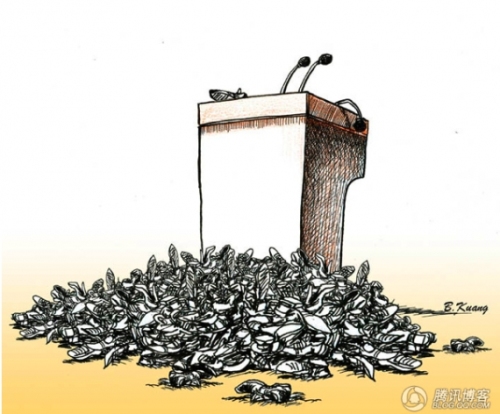
Clinton’s motorcade was pelted with shoes (a cultural expression of ultimate disrespect), tomatoes and rotten eggs. The following day similar anti-US demonstrations were held outside the US Consulate in Alexandria. Among the many placards carried by the demonstrators, one read “America’s Zero-Influence in Egypt,” and another said “Egypt is not Pakistan.”worse.


by Dr. Haider Mehdi


“Washington’s view is that only Washington, no one else, has a sphere of influence, and Washington’s sphere of influence is the entire world.” Paul Craig Roberts, “War On All Fronts” 
Recently, Egyptian political activists, nearly half-a-million of them, gathered outside the hotel in Cairo where Hillary Clinton, the US Secretary of State, was staying, to protest against her visit to Egypt. This huge and impressive gathering’s agenda was to tell Secretary Clinton: “You are not welcome in Cairo” and “America: do not interfere in the internal affairs of Egypt.” 


Later, Clinton’s motorcade was pelted with shoes (a cultural expression of ultimate disrespect), tomatoes and rotten eggs. The following day similar anti-US demonstrations were held outside the US Consulate in Alexandria. Among the many placards carried by the demonstrators, one read “America’s Zero-Influence in Egypt,” and another said “Egypt is not Pakistan.”


It is amusing that Egyptian political activists used Pakistan’s analogy in expressing their rage and anger to the extent of US interference in the internal affairs of a nation. Notwithstanding the emotions and the hurt involved by this analogy with Pakistan, there is a fundamental element of truth and political correctness in the perceptual outlook of the Egyptian demonstrators. After all, the facts are that Pakistan has been virtually a US “satellite” state and stigmatized as an American “client” nation for over six decades. Pakistanis need not to be emotionally disturbed over the public insults hurled at them in a foreign country and carried all over the world by the international media. We have no one else to blame but ourselves.


Let us remind ourselves that Egypt’s January 2011 revolution was inspired at the grass-roots level and the July 2012 protests in Cairo and Alexandria are a continuum of the same public political expression to democratize the country and get rid of foreign influence and external intervention in their affairs. For Pakistan and its masses, there are lessons to be learned from the Egyptian public uprising against their own ruling class and its intrinsic links with foreign powers, most specifically the US and its allies in Western Europe.


For its future survival and national solidarity, Pakistan will have to adopt a “Zero-Influence” policy in regards to US interference and intervention in its domestic and foreign affairs. Such a political discourse will not get off the ground unless a massive grass-roots public movement and uprising is set into nation-wide political action. Behind closed doors, US meddling in Pakistan’s internal affairs is reaching dangerous proportions, threatening Pakistan’s existence as a nation.


Muhammed Abdul Hameed, a Pakistani columnist who posts his Urdu articles on a blog, in a recent write up entitled “Who is behind all this and why?,” contends that Asfandar Yar, the ANP leader, travelled to Washington on an American invitation for a three-week top-secret mission prior to the 2007 elections. 


The American agenda was to bring him on board to carve out a new country by joining the Khyber province and tribal areas (Fata) and later include the “Pashto” speaking areas from Afghanistan in this new “Pakhtun” nation. The ANP leader agreed to the American plans and his government was installed in the NWFP with the explicit purpose of creating a “Pakhtun” state. Though the American -ANP plans failed, Asfandar Yar was able to rename the NWFP as “Pakhtunkhwa.”


Eric Draister, in the profoundly analytical article “Balochistan – crossroads of a proxy US war,” convincingly  argues that the US geo-political interests, world-wide capitalistic objectives, containment of China’s rising financial-industrial power and Russia’s re-emergence as a powerful adversary in global politics are the reasons behind the current unrest in Balochistan: “… unrest in Balochistan centers around forced disappearances, kidnappings, targeted killings, assassinations and terrorism. However, these are merely the tactics of a much broader, more geopolitically complex war in which the United States and its Western allies are engaged… Balochistan is, in fact, a nexus: the point at which diametrically opposing strategic interests converge.”


The US understands Balochistan’s strategic location in the context of its future geo-political interests. It weighs its natural resources and the need to exploit them for its own riches. It is in the interest of the US to destabilize Balochistan and carve a new country in this area for its 21st century doctrine of a New World Order. Draister argues that “The United States views Balochistan, an area that encompasses western Pakistan, eastern Iran, and a piece of southern Afghanistan, as critical to the maintenance of US hegemony in the Middle East and Central and South Asia.” Consequently, in view of the US determination to push for its global agenda, the political stake for Pakistan and its national existence is under serious threat.   


However, both Hameed and Draister, are in agreement that the US has flawed in its comprehension of the extent of “nationalism” at the grass-roots of Pakistani society. They also contend that America has failed in understanding the Pakistani military’s ability, resourcefulness and absolute resolve to safeguard and protect the territorial integrity of the nation.


But “nationalism” and a disciplined army is not enough to safeguard Pakistan’s future survival. What is vital is to translate and convert nationalist sentiments into a powerful and aggressively proactive, versatile, organized and progressive political movement to strike at the heart of this nation’s problematic: the removal of the traditional ruling elite and incumbent political “Mafia” from the seats of political power in the country. It is they who facilitate American influence and it is they who are responsible for the disastrous political course on which this nation is being pushed.


A new generation of leadership is required in this nation to keep it out of harm’s way. A leadership that can mobilize the entire nation towards a distinctively constructive political discourse: a democratic, social-welfare focused state, free of foreign influence, self-resilient, independent and above all morally-ethically informed to manage themselves and their state apparatus for national-political decision-making – short of that, we are likely to fail in a viable state-building process.


As a beginning to a people’s mass mobilization movement, Imran Khan’s PTI’s late September plans for a hundred-thousand people’s peace march to Wazirstan is an auspicious initiative. Let the American-Nato atrocities against the peaceful and innocent citizens of Pakistan be exposed. Let the entire world know that the US-West’s so-called “terrorism war” is a hoax – a pretext for the US-West’s selfish, inhumane, immoral-unethical approach to global politics.


Hopefully, the PTI’s march will be ostensibly organized to prove to the Americans and their allies that a substantial percentage of Pakistanis believe them to be unsound in their global policies and want them to be gone from this part of the world –permanently.


Never mind the Egyptian insult – it is time to learn a few lessons from them!
Let us find political solutions to Balochistan’s political problematics ourselves – and soon.
Let us start with a US “Zero-Influence” policy!

Disclaimer: The views expressed in this article are the sole responsibility of the author and do not necessarily reflect those of the ‘Wonders of Pakistan’. The contents of this article too are the sole responsibility of the author (s). WoP will not be responsible or liable for any inaccurate or incorrect statement / s contained in this post.
YOUR COMMENT IS IMPORTANT
DO NOT UNDERESTIMATE THE POWER OF YOUR COMMENT
Wonders of Pakistan supports freedom of expression and this commitment extends to our readers as well. Constraints however, apply in case of a violation of WoP Comments PolicyWe also moderate hate speech, libel and gratuitous insults.
We at Wonders of Pakistan use copyrighted material the use of which may not have always been specifically authorized by the copyright owner. We make such material available to our readers under the provisions of “fair use” only. If you wish to use copyrighted material for purposes other than “fair use” you must request permission from the copyright owner.


Saturday, July 14, 2012

Stilling a stormy relationship


With the word "sorry," Secretary of State Hillary Clinton recently opened the door for the United States to continue to supply its forces in Afghanistan through Pakistan.  Getting to this word took months of effort on both sides but "sorry" may not be enough to keep the relationship on an even keel for too long. It will need a sustained effort on both sides. The auguries are not good.


by Shuja Nawaz


With the word "sorry," Secretary of State Hillary Clinton recently opened the door for the United States to continue to supply its forces in Afghanistan through Pakistan.  Getting to this word took months of effort on both sides but "sorry" may not be enough to keep the relationship on an even keel for too long. It will need a sustained effort on both sides. The auguries are not good.

Wednesday, July 11, 2012

Why Pakistan Must Disengage from the US!


TIME TO "DISENGAGE" FROM THE US-LED WESTERN ALLIANCE


by Dr. Haider Mehdi


“The facts have changed, now we must change too.”
George Monbiot – author of The Corporate Takeover of Britain

This is a Pakistan foreign policy specific article.

It is not a historical coincidence that the US has been engaged in over 100 military conflicts, foreign invasions, covert overthrows, destabilizations and overt interventions in the affairs of other nations during latter half of the 20th century and in the first decade of the current era. It has been the result of an ideological project to subjugate the Third World to the military-political-economic-financial domination of US-Western capitalism and to exploit other nations’ resources for their own enrichment.

Thursday, December 23, 2010

Dealing With Pakistan


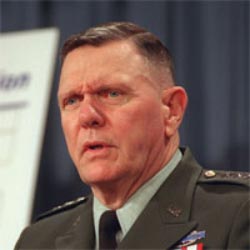
We “will continue to insist to Pakistani leaders that terrorists safe havens within their borders must be dealt with,” said President Obama. Retired General Jack Keane who in 2007 was used by former president George W. Bush as a back channel to deliver messages and counsel to General David Petraeus, puts it more bluntly: “Don’t just put a finger in their chest, put a fist in their chest.” 
”PUT A FIST IN THEIR CHEST”


by H.D.S. Grreenway


’Tis the season to bash Pakistan. That’s the message that leapt from the Obama administration’s Afghan strategy review last week. It’s Pakistan fault that we Americans are not winning the war, so we better get tough with Pakistan.
We “will continue to insist to Pakistani leaders that terrorists safe havens within their borders must be dealt with,” said President Obama. Others, such as retired Gen. Jack Keane, put it more bluntly: “Don’t just put a finger in their chest, put a fist in their chest.” But the message is the same — “U.S. Will Widen War On Militants Inside Pakistan,” headlined the New York Times. “Pentagon Planning More Attacks With Drones And Commandos.”
There can be no doubt of what the chairman of the Joint Chiefs of Staff, Adm. Mike Mullen, called — in Pentagon-speak — “the criticality of Pakistan in terms of overall success.” But is putting a fist in Pakistan’s chest really going to solve the “criticality” issue?
Pakistan is already permitting drone attacks on its territory — attacks that kill as many or more civilians than militants. It has also allowed limited U.S. special operations within Pakistan. Eighty percent of U.S. war material passes through Pakistan. Put a fist in Pakistan’s chest, as we did in September when a cross-border operation killed three Pakistani soldiers, and you may see some of this support dry up.
I recently drove past the hulks of burned out oil tankers by the side of the Grand Trunk Road headed to the Khyber Pass, torched by militants when Pakistan temporarily halted the convoys in retaliation for our incursion.
One might ask General Keane: What is it you don’t understand about closing the Khyber Pass? What chance would you give either the short-term or long-term sustainability of our Afghan effort without Pakistani cooperation? One hundred dollars worth of gasoline passing through Pakistan costs one thousand to ship though Central Asia.
So let’s stop all this talk of cleaning out the sanctuaries ourselves if the Pakistanis won’t. The United States doesn’t need to get involved militarily in another Muslim country.
The U.S. is extremely unpopular as it is with the Pakistani public. Do we really think we could prevail in the mountains of the Northwest Frontier with the whole countryside up in arms against us? If you really want to destabilize a nuclear-armed Pakistan, that would be the best way to do it.
Pakistanis feel, with some justification, that they are being scapegoated. “I’m not saying we are entirely innocent,” a member of Pakistan’s intelligence service told me, but after nine years of failing in Afghanistan it is easy to “put all the blame on someone else.”
Or as Lt. Gen. Asif Malik, commander of the Pakistani Army 11th Corps responsible for the tribal territories, told me: Organizations such as the Haqqani group are not completely dependent on Pakistani territory. They, and the rest of the Taliban, can operate quite well in Afghanistan without sanctuaries — to which the deterioration of security in northern Afghanistan attests.
And from Pakistan’s point of view, there are Taliban attacking Pakistani soldiers from safe havens in Afghanistan that NATO cannot stop. The frontier with Pakistan will always be porous. The mountainous border cannot be sealed completely.
Yes, Pakistan wants to keep some Pashtun guerilla groups close as a hedge against the future. General Keane says that once we show Pakistan that the Taliban cannot come back to power in Kabul, Pakistan will abandon these groups and get on the team.
But Pakistan’s Afghan policy is consistent. It does not want a hostile neighbor on its western border. Pakistan fears the present Kabul government, dominated by the India-backed Northern Alliance of Tajiks and Uzbeks, unless more pro-Pakistan Pashtuns are better represented.
How can Pakistan be confident that the United States will be able to turn security over to an Afghan Army by 2014? Afghan soldiers regularly loot the properties of the very citizens they are tasked with defending, and the Karzai government is unloved. Although there has been much progress in training the Afghan Army, serious training began only last year. My tennis game can show a lot of improvement in one year, but it doesn’t mean I will be ready to play Roger Federer by 2014.
Pakistanis know that, whether it be 2014 or 2024, Americans will go home, and Pakistan will still be left with Afghanistan next door.
The Obama administration understands the need to work closely with Pakistan, and yes, Pakistan can be endlessly frustrating — even to Pakistanis. But more emphasis on trying to understand Pakistan’s vital national interests — some “strategic patience,” as Admiral Mullen put it, and a little less bullying — might be more productive.
Too often, the American attitude is master to servant: We give you money now do what we say, and do it right now.
--

Disclaimer: The views expressed in this article are the sole responsibility of the author and do not necessarily reflect those of the ‘Wonders of Pakistan’. The contents of this article too are the sole responsibility of the author(s). WoP will not be responsible or liable for any inaccurate or incorrect statements contained in this post.
YOUR COMMENT IS IMPORTANT
DO NOT UNDERESTIMATE THE POWER OF YOUR COMMENT
Wonders of Pakistan supports freedom of expression and this commitment extends to our readers as well. Constraints however, apply in case of a violation of WoP Comments Policy. We also moderate hate speech, libel and gratuitous insults.


Monday, December 20, 2010

My Life With The Taliban: An Excerpt [5 of 5]


THE INTERROGATIONS

Every day prisoners were mistreated in the camp. A Pakistani brother who had a bad toothache had only been given Tylenol by the medic in the camp. Eating was painful and difficult for him, and he could not manage to finish his food in the thirty minutes allocated for each meal. When the soldier came to collect his plate, he asked to be given more time because of his teeth. The soldier took him to the entrance and hit him in the mouth while the rest of us watched helplessly. After we saw how they treated the Pakistani brother, we decided to go on hunger strike. Word spread quickly and soon the entire camp had stopped eating. When the camp authorities came to find out what the reason for the strike was, we informed them about the abuses of the soldier and that we would no longer tolerate them. We were promised that incidents like this would be prevented in the future and we stopped the hunger strike. Even though we were subject to harsh conditions, this was the first hunger strike to have taken place under the American invaders’ custody.
The next day Mohammad Nawab, who was very ill and could not stand up, was beaten and kicked. The soldiers had come to inspect the tent and ordered the prisoners to move to the back. Mohammad Nawab had not moved; he had remained in bed. When the soldiers saw him, a group of them started to beat and kick him before they dragged him to the end of the tent and dropped him at our feet. I should mention that not all American soldiers behaved in this way; some were decent and respectful and did not join their comrades in the abuses. Some abuses were worse than others and affected everyone in the camp. One afternoon I woke up to the sound of the men crying. All over the camp you could hear the men weep. I asked Mohammad Nawab what had happened. He said that a soldier had taken the holy Qur’an and had urinated on it and then dumped it into the trash.
We had been given a few copies of the Qur’an by the Red Cross, but now we asked them to take them back. We could not protect them from the soldiers who often used them to punish us. The Red Cross promised that incidents like this would not be repeated, but the abuses carried on. The search dogs would come and sniff the Qur’an and the soldier would toss copies to the ground. This continued throughout my time in Kandahar. It was always the same soldier who acted without any respect towards the Qur’an and Islam. There were many other incidences of abuse and humiliation. Soldiers were conducting training with the prisoners as guinea-pigs: they would practise arrest techniques — all of which were filmed — and prisoners were beaten, told to sit for hours in painful positions. The number of such stories is endless. All the while the interrogations continued. One night, when I had already been in Kandahar for several months, I was called for interrogation. I was asked if I wanted to go home, told that they had not benefited from my detention and had found no proof that I was involved beyond my dealings as Ambassador. They were planning to release me, they said. They would arrange for money, a phone and anything else I needed. After all this they told me the condition for my release: all I had to do was help them find Sheikh Osama and Mullah Mohammad Omar. Any time I would choose detention over this kind of release. I would not dare to put a price on the life of a fellow Muslim and brother ever!
I interrupted them and asked them what the reason for my detention was. They said that they believed I know about Al Qaeda, the Taliban, their financial branches, and about the attacks on New York and Washington. I had been arrested to investigate all these allegations. Given that they had not found any proof of what they had accused me of, they must see that I was innocent, I said. I had been arrested by the Pakistani government, and should be released without any conditions. For three days they talked about financial aid and a possible deal if I would agree to their terms, but I turned all their offers down. Once again their behaviour changed. They threatened me and my life, again.
The next day a group of soldiers came to our tent throwing a bunch of handcuffs towards a group of prisoners. After they put on the handcuffs, they were tied together and led away. We all wondered what was happening. Some believed that we were being released; others speculated that they might get transferred. But they all were brought back a few hours later. Each and every one was shaved — their beards, hair and eyebrows. Every single hair was gone. This was the worst form of punishment. In Islam it is forbidden to shave one’s beard. It is considered a sin in the Hanafi faith. It is better to be killed than to have one’s beard shaved. I was in the next group that was led away to the barber. I asked the barber not to shave my beard; he replied with a hard slap to my head. I did not open my eyes for several minutes while the pain rushed through me. Later, when a doctor asked me what had happened to my face and I complained about the barber, I received another slap from the doctor, telling me I should not complain about the American invaders.
During one interrogation session, I was asked if I knew Mr Mutawakil [the Taliban foreign minister] and there were several other questions relating to him. Finally I was asked if I wanted to meet him. I doubted that he had been arrested and asked where he was and how I could meet him. A few moments later he entered the room. He had brought me a packet of Pakistani biscuits, but my hands were tied and I was unable to eat them. Nor was I allowed to take them with me. We talked for ten or fifteen minutes and then he left again. In the short meeting I learnt that I would soon be transferred to Cuba. Mr Mutawakil did not say much more about that. He knew that Allah knew best what would happen to me. The next day I was interrogated again. I was told that I would be transferred to Cuba on 1 July.
The interrogator added that those going to Cuba would spend the rest of their lives there and that even their bodies might never find their way back to Afghanistan. This was my last chance, he said; I had to make a decision to go home or to be transferred to Cuba. Once again he stated the conditions for my release. If I were to go home, I would have to work with and help the American intelligence agencies in their search for Al Qaeda and Taliban leaders, remaining their slave for the rest of my days. May Allah save us from committing such a sin! Even though I was given a day to think about it, I replied immediately: “I am not more talented or important than any of the brothers detained here. I accept the decision made for me by Almighty Allah. I have not committed any crime, and so will not admit to any crime. It is now up to you to decide what to do with me and where I shall be transferred”. After this interrogation I hoped that the transfer would come soon.


TO GITMO- IN CHAINS


On 1 July 2002 I was taken to the barber and shaved once again. Afterwards a group of soldiers came and threw chains at the entrance of the tent. One after another we were chained together to be transferred to Cuba. I was the fourth person in the row. Our hands and feet were bound and our heads covered by black bags, chained together in groups of seven or eight people. We were brought to another waiting area; the black bags were replaced with black goggles and plugs were put into our ears. Before we were brought to the plane, we were photographed again, and given a set of red clothes and red shoes. Our mouths were covered with a mask and hands and feet bound with two different kinds of chains. Once in the plane, our feet were locked to a chain on the ground, and our hands were bound behind our backs and locked to the metal chairs. It was impossible to move, not even an inch. It was a painful position and soon after the plane took off some of the prisoners started to struggle with their chains, screaming and moaning in pain.


They remained chained in this position for the entire journey, and weren’t allowed to use the bathroom. We were locked into these positions four hours before the plane even took off and we still remained there three hours after it had landed. We spent close to thirty hours locked in those chairs. The chains cut off the blood supply to our hands and feet. After ten hours I lost all feeling in them. Our hands were so swollen that it was difficult for the American soldiers to open the handcuffs, which had sunk deep into the flesh. The airplane landed once during the flight before arriving in Cuba. Once off the plane we were ordered into rows while being screamed at in Arabic and English: “Don’t move. Stick to your place!” But after thirty hours in chains, with hands and feet hurting, some moved and stretched. Seeing this one of the soldiers kicked and beat them. I myself was kicked three times. We were moved to the base and I was brought for a medical check-up. Then they took me to an interrogation room and chained me to a chair. A few moments later an interrogator came in—accompanied by a Persian translator. He introduced himself as Tom.

He was assigned to probe me, he said. I was too tired from the long and painful journey to talk and told him that I just wanted to be transferred to wherever I would stay from now on and that we could talk tomorrow if he wanted, but Tom insisted that we talk straight away.

My mouth was dry, and I could hardly stay awake. Up until then everyone had been advising me to try to avoid being transferred to Cuba, but now that I had arrived I had nothing left to fear. I did not even care about the punishment anymore. Now in Guantánamo, we preferred death over life. Even though Tom insisted, I barely responded to any of his questions and so he finally left the room. I was brought to a small cage made out of a shipping crate. My hands and feet were unfastened and I was left alone. A food ration had been left for me in the cage but it was having water that made me most happy. It was the first time in months that I had the amount of water necessary to perform my ablutions. I washed, prayed and went to sleep. I slept well, missing the night prayer, and woke up just before the morning. 
Concluded.

Previous 1, 2, 3, 4, 5. 
----
Disclaimer: The views expressed in this article are the sole responsibility of the author and do not necessarily reflect those of the ‘Wonders of Pakistan’. The contents of this article too are the sole responsibility of the author(s). WoP will not be responsible or liable for any inaccurate or incorrect statements contained in this post.
YOUR COMMENT IS IMPORTANT
DO NOT UNDERESTIMATE THE POWER OF YOUR COMMENT
Wonders of Pakistan supports freedom of expression and this commitment extends to our readers as well. Constraints however, apply in case of a violation of WoP Comments Policy. We also moderate hate speech, libel and gratuitous insults.

My Life With The Taliban: An Excerpt [4 of 5]


Tortures, insults, torment
go on and on and on


When I was taken to Bagram, every day I hoped that it would be my last. I only had to look at my shackled hands and feet, my broken head and shoulders, and then I would look at the inhuman, insulting behaviour of these American soldiers; I had no hope of ever being free again. When I met the six prisoners who were being hidden from the Red Cross in Bagram, I understood that there was something going on … I did not see any representatives of the Red Cross at Bagram because the Americans had also hidden me from them, but when I was transferred from Bagram to Kandahar, I saw the Red Cross on the second day after I arrived. They did not have a Pashtu translator with them, just an Urdu speaker whom they had taken from their Islamabad office. He was not Pakistani himself, but he could speak fluent Urdu. They had Arabic speaking staff as well. For Pashtu they had three people who hardly could speak the language at all: Julian, Patrick, and a German who had spent a lot of time in the Peshawar area. It was the first time that I had been able to tell my family that I was alive. I was given a pencil and paper, and a soldier sat in front of me while I wrote. When I was finished I gave the pencil and the paper back to the soldier. I did not receive any letters from home when I was in Kandahar, and nobody gave me any information about my family, about what had happened to them after I was arrested.
There were lots of Red Cross representatives going back and forth, talking to us through barbed wire. They were asking questions about our health and other problems. They told us that whatever we said would stay safe with them, and that they would not tell the Americans. But we were suspicious. We thought they might be lying; we could not trust them and we were not open with them. We did not tell them what was in our hearts. We could not complain about the situation, because right in front of their eyes the Americans were taking us to interrogation, they were dragging us along the ground, sometimes with two or three soldiers sitting on top of us. The Red Cross delegates saw this, but they did not help.
The detainees told all of the brothers to be careful in what they said. According to them, there were many American spies masquerading as Red Cross delegates, tricking us while pretending to help. But in any case we had nothing useful for the Americans. We had nothing to do with any spying. The only sensitive issue was complaints, and the fact that many of the brothers had given false names and addresses when they were captured. So now they could not give new names and addresses to the Red Cross, so their letters were being sent to the wrong places. It was hard for them to tell the truth to the Red Cross, because they were afraid the information would get back to the Americans. I had the same suspicions when I was in Guantánamo.
We did not understand the level of assistance we were getting from the Red Cross while we were in Kandahar. But I did know three things they were doing: first, they were connecting us to our families with those letters, which was very important. Second, they gave us four Qur’ans per each set of twenty people. Third, they arranged for us to take our first shower in four months, even if it was a communal, naked, and very embarrassing shower. They also gave us clean overalls. According to the Red Cross, all of these things were done at their suggestion.
Our guards changed shifts twice a day and many of the low-ranking soldiers misbehaved, bearing ill-will towards Muslims. Every time they would appear, we had to stand in a row looking at the ground, and if the number of a prisoner was called he had to say ‘welcome’. Any prisoner who disobeyed these orders was punished. Every day all prisoners were lined up outside and made to stand in the sun. There were about twenty tents that held eight hundred prisoners. Not all soldiers were the same, but some would command us to stand there for half-an-hour before they took the attendance register and almost two hours afterwards. No one was allowed to sit down or stand in the shade, no matter what his condition. May Allah punish those soldiers!
The guards inspected the tents inside and outside along the barbed wire every day. One time a soldier found a piece of broken glass outside on the ground. He was one of the meanest soldiers, and upon discovering the piece of glass he gave it to me and asked where it had come from. I tossed it back to him and said that I did not know; we had brought nothing with us. The glass must have been here before, I told him. The soldier kept repeating his question. “Don’t talk. I will fuck you up”, he screamed at me. I was forced to kneel with my hands behind my head for several hours; from time to time he would kick or push me to the ground. There was no point in complaining about the behaviour of the soldiers; it would only make the punishment even worse. I will never forget the treatment I suffered at the hands of these slave rulers.
Kandahar prison camp had several sections. Next to the ordinary prison tents, one of the old hangars — previously a workshop for air planes — was now being used for the prisoners. Most prisoners feared it as a place of extreme punishment. Several times I saw prisoners being transported to the hangar bound with metal chains. In another separate location they deprived prisoners of sleep, holding them for months on end. The camp was guarded by six watchtowers and patrols, on foot and with vehicles, which took place all day and night. There are too many stories from the time when I was a prisoner in Kandahar. One day a new prisoner was brought to the prison tent where I was detained. He was a very old man. Two soldiers harshly dragged him into the tent and dropped him on the floor. He was ordered to stand but neither could he stand nor was he able to understand the men. He seemed to be confused; other prisoners told him to stand up but it was as if he could not distinguish the soldiers from the prisoners.
On the second day when he was called for interrogation and had to lie down to be tied up, he did not understand again. None of the other prisoners were allowed to help him; we were told to move towards the far end of the tent. Soon the soldiers let their passions loose and kicked him to the ground. One of them sat on his back while the others tied his hands together. All the while the old man was shouting. He thought he was going to be slaughtered and screamed, “Infidels! Let me pray before you slaughter me!” We were shouting from the back of the tent that he was just going to be interrogated and that he soon would be back at the tent, but it was as if he was in a trance. I cried and I laughed at the same time. There was so much anger in me as I watched the old man being dragged outside. When he came back I sat down to talk to him.
He said he was from Uruzgan province and that he lived in Char Chino district. He told me he was 105 years old, and eventually he was the first man to be released from the Hell of Guantánamo. In the camp we would pray together in congregation. One morning while I was leading the morning prayer, we had just started performing the first raqqat when a group of soldiers entered our tent and called the number of an Arab brother to take him for interrogation. The brother did not move, but continued with his prayer as is commanded by Allah. He was called a second time. By the third time, the soldiers rushed in, threw me to the ground, pressing my head into the floor, sitting on me while two others grabbed Mr Adil, the Arab brother from Tunis, and dragged him out. There was no respect for Islam.


Continue reading... Next

Previous 1, 2, 3, 4, 5
----
Disclaimer: The views expressed in this article are the sole responsibility of the author and do not necessarily reflect those of the ‘Wonders of Pakistan’. The contents of this article too are the sole responsibility of the author(s). WoP will not be responsible or liable for any inaccurate or incorrect statements contained in this post.
YOUR COMMENT IS IMPORTANT
DO NOT UNDERESTIMATE THE POWER OF YOUR COMMENT
Wonders of Pakistan supports freedom of expression and this commitment extends to our readers as well. Constraints however, apply in case of a violation of WoP Comments Policy. We also moderate hate speech, libel and gratuitous insults.http://wondersofpakistan.blogspot.com/2010/12/my-life-with-taliban-excerpt-5-of-5.html

Search

Custom Search