Showing posts with label Tourism Reports and Essays. Show all posts

Wednesday, July 4, 2012

The Shrine of Mevlana Jalal-ud-din Rumi, Konya, Turkey


VISIT TO THE SHRINE OF THE IMAM OF SUFIS

by Hafeez R. M.


I boarded a bus to go to Konya from Nevsehir. The bus kept going for about four hours with some brief stops. I became perturbed as I did not see any milestone or direction signs for Konya though it was 221 km away. I asked a nearby passenger, “When we would reach Konya?” There was a sudden silence in an otherwise packed bus. All eyes darted on me. “Never on this bus”, said one then told me politely that it was going in the opposite direction. I got down at the next stop, Sivas, and after two hours wait took a returning bus for Konya. I hate back-tracking, I always try to travel in a loop but sometime it doesn’t happen. After all, there is Murphy’s Law which says “If something can go wrong, it will”


Tuesday, July 3, 2012

My Turkey Trip


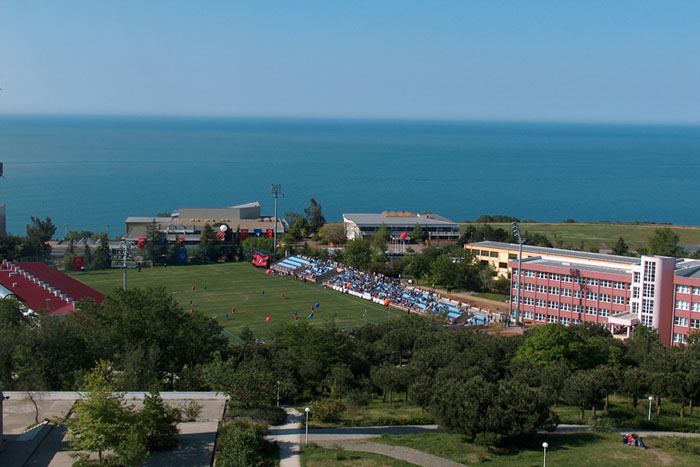
A view of Trabzon city from the KTU campus.


Erzurum is built on a 1,950m (6,400 ft) high plateau, surrounded by the Eastern Anatolian Mountains. It is the junction of the old Central Asian trade routes, and was the base for the Turkish War of Independence – the Erzurum Congress of 1919 effectively ended Ottoman rule in Turkey. The house in which the revolutionaries stayed is now the Ataturk Museum in a side street off Çaykara Caddesi. Even though Erzurum has suffered · some horrendous earthquakes in its time, a considerable number of remarkable old buildings still survive to attest to its past. 


A VISIT TO TURKEY‘S FABULOUS CITIES
.
.

by Hafeez R. M.


"I'm from Pakistan. I’ve got a lot to declare", said I entering Turkish Customs. "Musheriff eldum", replied the officer. (He meant he was honoured.) "Gule, Gule." (go laughingly), he continued and I was out in a wink with my backpack remaining un-zipped.

Thursday, December 2, 2010

Memories of Pakistan


   A grave may seem an unlikely setting for a celebration, but every Thursday night the derelict tomb of Baba Shah Jamal in Lahore, Pakistan, attracts those seeking spiritual ecstasy through dancing, drumming and-in some cases-hashish. Shah Jamal, a 16th century Sufi saint, used drums and ecstatic dancing to spread his faith throughout Pakistan and devotees have been upholding the tradition for more than 300 years. Today, the ministry is carried on by Pappu Sain and his two students, Gonga and Mithu Sain—resident holy men at Shah Jamal's tomb, which is also a shrine.

A feel of relationship with country and its spirit


By Aakar Patel  


It is said that right up to the time of the field marshal Ayub Khan, Pakistanis could drive across the border into India, and Indian movies were shown in all the halls of Lahore and Karachi.

Sunday, February 22, 2009

Tourism not Terrorism


POST MUMBAI CONCLUSIONS


by Dilnawaz


       The PAKISTANI GOVERNMENT under President Zardari started peace initiatives with India taking tentative steps to liberalise trade and tourism with India. Zardari doing a live webcast (his firstever) with English speaking Internet users in India and coining terms like “In every Pakistani there is some India and in every Indian some Pakistan” was very optimistic.

Thursday, February 19, 2009

A Vista of opportunities for our ailing economy


                                                         by Masood Ali Khan

              
           In 2001 around 10 million Chinese traveled all over the world spending 20 billion US dollars. What could have been our share had we captured only 5% of 20 billion US dollars? By the year 2020 the number of Chinese travelers is expected to grow up to 100 million generating 200 billion US dollars. If we could target just 5% of that Chinese market by 2020 it would mean 10 billion US dollars directly added to our economy from one country only.


         I have quoted the figures of China’s outbound tourism for the 2001. In later years this picture has changed drastically and number of Chinese tourists going abroad has increased by 300% (31miollion in 2005). By 2008 when almost every country faced an economic recession, number of China’s outbound tourists still registered growth (which has been the result of a high growth rate in China’s GDP which also strengthened the Chinese Yuan).  
        We have so many opportunities to generate revenues from tourism.


Opportunity – I: Heritage Tourism

After China - Japan, Taiwan and South Korea in the Far East offer a potent market with largest number of outbound tourists. This too is a substantial market for Pakistan’s inbound tourism. Our Buddhist heritage (the Gandhara art) is an avenue where no wizardry is required. We only need to market our heritage sector properly to the Far Eastern travelers as many Buddhist shrines and relics feature prominently in their tours.


The advent of Islam in the early eighth century in the region yielded a new form of architecture that has the potential even today to attract people from all over the world. The Islamic architecture reflected in the pre-Mughal buildings and then the magnificent and the most popular Mughal heritage; all are gems of history which easily fascinate the tourist.

Opportunity – II: Mountain Tourism

Pakistan is also very special because of its unique mountain scenery. Mountain climbing and trekking in Hunza, Karakorams, along the Silk Route and a trip to historic Khyber Pass is a treat in itself.
Mountaineering, however, is no more a growth product – it has reached its saturation point. There are hardly any peaks left now for the mountaineers to conquer. Trekking too is close to saturation. In order to capitalise, therefore, our mountains, our peaks, we need to go for innovation; to attract such tourists who may wish to view our beautiful mountain scenery, find relaxation in its tranquil environs and this would enable us sustain our mountain tourism even if international climbers cease to visit
.
Opportunity – III: Archeology

In archeology, we have our great Indus Valley Civilization. The excavations at Mehrgarh, Moenjodaro and Harappa are unique experience for any traveler, a ‘Must Visit’ for a tourist who wants to know the origin of humanity. The human teeth found at Mehrgarh, drilled 7000 years ago by a dental surgeon; to relieve a person of the torture of pain is a testimony to the innovation of early man in Mehrgarh (the starting point of Indus Valley Civilisation) can also be an effective marketing tool to make people visit these places


With all these feathers in our cap, where do we stand in the world of tourism?

Tourism statistics of the last decade show, our tourism is a market led industry and not supply driven. This means Pakistan is not encouraging increasing number of tourists to visit the land. Over the years our policy makers, have been making decisions based on outdated statistical information and miscalculated research findings coupled with misleading assumptions. As a result tourism has been misused and mismanaged over the last two decades. This has led to a gradual decline with respect to the public and private sectors and has also contributed to tourism not being taken seriously; excepting only those who are directly dependant on this sector for their livelihoods.

Otherwise too tourism assets have been downgraded, and left to depreciate. They have poor infrastructure and there are hardly any Minimum International Standards (MIS). Due to lack of marketing strategy and funds, Pakistan has no influence in the international marketplace; no new capacity development areas have been identified for the last 20 years for short or medium term strategy purposes. Government’s tourism budget is focused more on fixed expenditures (salaries and establishment) than on research, marketing and promotio

To sum up, what should we do!

There is mistrust among the two wings of the tourism sector i.e., public and the private sector; hence there is a dire need to establish closer liaison between the two. Tourism standards are not heartening in terms of ‘product’ and ‘human resource’. Sites known for cultural heritage; are not adequately protected and are in danger of being systematically plundered. Environment and ecology are at stake owing to lack of control and enforcement

For any tourism industry to flourish, there are primarily six core issues, which need to be reviewed, analyzed, researched, developed and implemented within the given time frame. The implementation process must be monitored strictly by Parliament’s Standing Committee on Culture Sports and Tourism and group of private stakeholders. This should be publicized and communicated to public as well:

1.     Sustainable Tourism Policy and Management
2.     Environment
3.     Infrastructure
4.     Human Resource Training and Development
5.     Funding

Tourism is a tripartite sector and the stated policy is not only implementable but it has to be implemented. Government being responsible for the policy, public sector for implementation and private sector to ensure the results of the policy, fit perfectly into this preview and enhance the development as well as promotion of tourism as a viable sector; which will trigger a sound economic activity creating a range of benefits for the government as well as the people.

Establishment of an effective management structure by streamlining the Ministry of Tourism and Culture and setting up a statutory public-private sector partnership has become inevitable. Tourism is mainly a private sector industry, governments world wide are gradually divesting themselves of the commercial activities of tourism and responding mainly to the supportive responsibility of policy making, monitoring and regulatory standards.

In Pakistan, Tourism Industry’s ratio of fixed costs over marketing and promotion costs are unacceptably high and in view of the enormity of promotional responsibilities to market Pakistan tourism, the variable budget falls short to the point that what small amount of money is spent on promotion has no impact and can be deemed as a wasteful and negative expenditure. To secure its future, Pakistan must invest adequate funds towards tourism; by directing and mobilizing a realistic proportion of the revenues generated for industry support. If the marketing, monitoring, management and maintenance of tourism resources of Pakistan are not adequately funded, the country cannot compete in international tourism and achieve social and economic objectives.

The human resources of federal and provincial ministries have to be reoriented and trained on “International Minimum Standards” instead of only emphasizing on controls, permissions and licenses in hospitality industry, tours and travel, trekking and mountaineering. Safe, comfortable means of transportation, development of roads, rest houses, sanitation and a secure, clean and healthy environment according to Minimum International Standards all provide the parameter to check and measure the performance of public and private sector in Tourism Industry.


Writer is a former Managing Director of the PTDC, Islamabad and presently CEO of ‘Takhleeq’ rendering consultancy on hospitality.


YOUR COMMENT IS IMPORTANT
DO NOT UNDERESTIMATE THE POWER OF YOUR COMMENT
Wonders of Pakistan supports freedom of expression and this commitment extends to our readers as well. Constraints however, apply in case of a violation of WoP Comments PolicyWe also moderate hate speech, libel and gratuitous insults.
We at Wonders of Pakistan use copyrighted material the use of which may not have always been specifically authorized by the copyright owner. We make such material available to our readers under the provisions of “fair use” only. If you wish to use copyrighted material for purposes other than “fair use” you must request permission from the copyright owner.

Monday, January 19, 2009

A PEACOCK STORY

 The Tale of a Mound in Harrapa


by Umair Ghani

   One of world’s most renowned archeologists, Sir John Marshall reacted with sudden surprise when he saw the famous Indus Bronze Statuette of a slender limbed “Dancing Girl” in Mohenjo-daro:

“When I first saw them I found it difficult to believe that they were prehistoric; they seemed to completely upset all established ideas about early art and culture. Modeling such as this was unknown in the ancient world up to Hellenistic age of Greece, and I thought, therefore, that some mistake must surely have been made, that these figures had found their way into levels some 3000 years older than those to which they properly belonged...”

   Similar thoughts permeated my being in front of a huge mound in Wahniwal, as I witnessed unearthing of a small piece of pottery with a beautifully drawn figure of subcontinent’s most cherished fowl: a peacock. Sheer awe besieged me. I heard Zubair Ghouri’s victorious yell. I watched his dance of euphoria and triumph in a state of ecstatic delirium. “What a way to end a day!” he cried out loud and ancient winds carried his words to me years across the dust covered mound.
   I felt that eternal satisfaction surge through my whole being which comes while witnessing an accomplishment. I was part of this discovery.  I was member of a team which had found this beautiful piece of terracotta pottery that remained buried for several thousand years in oblivion. I touched and felt the rough clay figurines which carried primeval tales of the earliest settlers on these soils.
   I and Zubair Ghouri had only arrived at Qutabpur a day before. Spurred by excitement to visit ancient Harappan sites by the side of the dry course of river Ravi and Beas, Ghouri had consented to take me along on one of his very personal explorations of Indus Valley sites. Ghouri, the author of a significant book in Urdu titled Ravi Kinary Ki Harappai Bastiyan [Harappan Settlements on the Banks of River Ravi], loves to talk about his earlier discoveries in Balochistan, Sindh and now in Punjab. Since this was our maiden venture, he was hesitant to deliver scholarly opinions in response to my incessant queries. “I am still in the dark. The evidence is insufficient. It will be too early to establish any authentic opinion on the basis of excavations at Harappa and Moenjodaro only,” he said; as we eagerly started eating Halwa in guest room of Qutabpur railway station, which Ahmed Bukhsh, the station master offered us as a token of gratitude for Ghouri Sahib’s gracious presence.
   Tea tasted even better. I sipped it down my cold stomach in big swallows. Wintry winds howled outside cutting through the silence of the dark wintry night. Charpoys felt cozy and I dozed off amid dreams of ancient voices and figures dancing all around me.  
   Fog and cold descended stealthily on the mound near Qutabpur cemetery. Probably to guard hush of the ages that laid buried there. ‘Twenty Minutes, Umair sahib,” said Ghaouri as he began to reveal secrets of the dead, “You’ll find surprises awaiting you, but we need to be at Wahniwal before noon!” I looked around with shy curiosity of a bewildered child. Suddenly aware of my presence amid silence and secrets of an epoch now lost forever, shrouded in a deep and mysterious hush, waited me to approach and break the silence. With cautious steps of a dazed explorer, I moved above the mound. Shreds of pottery crunched and creaked under my heavy boots.  Ghouri was busy looking for objects of his particular interest.
    Occasionally he would pick up some portion of ancient pottery and after a close observation would place it into plastic bags [which he carried in abundance] with great care. “What is this,” I pointed to a tiny round piece which apparently looked like fragment of plaster of Paris. “Steatite Bead!” said Ghouri, “also called burial beads and sometimes termed as ankle beads. You’ll find them at almost every mound we visit.” With quivering hands I touched that object from antiquity and watchfully placed it in a synthetic bag which Ghouri Sahib had offered with great bounty. I spotted a piece of stone, sharpened at one edge like a blade, probably used as a knife. And then through Ghouri’s guidance learned my first on field lessons in anthropology.
   Looking down consistently, with observant eyes proved to be a tedious task, but the fear to miss something significant was more tiring. My gaze remained glued to the ground and I did reap rewards for that. Ghouri Sahib occasionally glanced back and encouraged me with satisfactory nods.
   We arrived at Fojianwala a little later. This mound had a considerable spread. Pottery shred scattered on the surface and I found myself bamboozled in the age old kid’s game of Yasu, Panju, Lal, Kabutar, Doli…a kid’s game but a riddle of never ending times. What I found there, too was a riddle of never ending time.

Search

Custom Search