Showing posts with label Al-Qaeda. Show all posts

Friday, March 11, 2011

The CIA-ISI showdown over Raymond Davis

The Pakistan-U.S. relationship sometimes feels more like an arranged marriage than a love match: both stay in it because of larger considerations, and begrudgingly acknowledge or even outright deride the other's concerns and priorities.


SPY for a  SPY

by C. Christine Fair


The United States and Pakistan are bound by mutual if asymmetric dependence, which generates considerable resentment among our peoples and governments alike. The Pakistan-U.S. relationship sometimes feels more like an arranged marriage than a love match: both stay in it because of larger considerations, and begrudgingly acknowledge or even outright deride the other's concerns and priorities.  

This is not new: it has been the case since the partnership was renewed in the wake of the events of 9/11. 

Sunday, November 28, 2010

First Fake “Taliban,” Then Fake “Al Qaida”


The World of fakery: From Bush Jr. to 9/11 to Fake Mullah MansoUr


by Paul Wood


[The question that we must all now ask is: "Were the British military/spooks trying to deceive the Americans or were they performing a service for the military/CIA?"   Since there is "O" probability that the British govt. is anything more than an American "lap dog," dedicated to keeping us happy, then it becomes obvious that this latest fake "Taliban" is another American fake Taliban (SEE:      The “Legitimate Press” Almost Gets It On Afghanistan ).  
They knew that it would eventually be exposed for the idiocy that it was, but was it more than just a stalling tactic?  Was it more than just a diversion, to buy the American generals and diplomats time to open their back door into Russia's back yard?  The brilliant morons over at CIA also know that one day America's dirty hands in creating the terror war would be exposed as brutal stage-acting, even though the actors that they have chosen to do the stage-managing have mostly been Pakistanis, Brits, Turks or Israelis.  Gambits, like all the fake Taliban episodes, are often employed to just get to the next gambit or ruse, and to put-off the day when people would forget all about exposing the fake "Taliban," and begin to expose the mother of all lies, fake "al Qaida."  
Our government, with the help of all its foreign collaborators, has created the "al Qaida" terrorists and the war intended to eliminate them out of "whole cloth."  The leaders of American government are so immoral and vicious, that they would do this to their fellow man, in order to gain temporary advantage.
Whenever the truth comes out about our government's role as the greatest creator of political terrorism in all human history, and the perpetrators of the reign of agency-contracted terror which began on Sept. 11, 2001 stand exposed before the people of the world...Then the American people will be forced to act and physically remove our own fake "government," before the angry frenzied mobs of the world forcibly carry-out that task for us.] 
---

Karzai’s office blames British for Taliban impostor

A man described as Mullah Mansour, a senior Taliban commander is said to have been brought into sensitive meetings with the Afghan authorities.


President Hamid Karzai’s chief of staff has said British authorities brought a fake Taliban commander into sensitive meetings with the Afghan authorities.
The British embassy refused to confirm or deny the remarks, made in an interview with the Washington Post.

A man described as Mullah Mansour, a senior Taliban commander, was reportedly taken to Kabul for a meeting with President Karzai himself.

Now it is claimed he was really a Pakistani shopkeeper from Quetta.

The impersonator is said to have disappeared after hundreds of thousands of dollars were paid to him for his co-operation in the process of Taliban reconciliation.

President Karzai’s office is blaming the British authorities for this debacle – telling the Washington Post the man was brought to the meeting by British diplomats.

A spokesman for the British embassy in Kabul said they did not comment on operational matters.

The Afghan government’s meetings with the Taliban – fake or otherwise – have been described as contacts rather than negotiations.

If there was indeed British involvement, the question is whether this was logistical support or something more active.

“If we are desperate to talk to the Taliban, the Taliban will think, ‘we are winning’,” said one Western official.

Full negotiations to end this conflict still seem a long way off – and the case of the Taliban impostor will not have helped matters.

Disclaimer: The views expressed in this article are the sole responsibility of the author and do not necessarily reflect those of the ‘Wonders of Pakistan’. The contents of this article too are the sole responsibility of the author(s). WoP will not be responsible or liable for any inaccurate or incorrect statements contained in this post.
YOUR COMMENT IS IMPORTANT

DO NOT UNDERESTIMATE THE POWER OF YOUR COMMENT
Wonders of Pakistan supports freedom of expression and this commitment extends to our readers as well. Constraints however, apply in case of a violation of WoP Comments Policy. We also moderate hate speech, libel and gratuitous insults.

Monday, November 1, 2010

NEW WAR RUMORS: U.S. PLANS TO SEIZE PAKISTAN'S NUCLEAR ARSENAL - II

we are all destroyed by monsters—of—our—own creation


by Rick Rozoff


That the leaders of the other two armed groups identified by McChrystal - Haqqani and Hekmatyar - were among the three Mujahideen leaders financed, armed and trained by the CIA (the late Ahmed Shah Massoud being the third), makes the pattern complete: Robert Gates the defense secretary is leading a war against forces that Robert Gates the deputy director of the CIA earlier supported through one of the Agency's longest and most expensive covert programs, Operation Cyclone.


After retiring from public life, George Kennan, the main architect of U.S. Cold War policy, cited a line he ascribed to Goethe to warn that in the end we are all destroyed by monsters of our own creation. To emend Voltaire, the White House rather than God is a comedian playing to an audience too afraid to laugh.

Woodward's account of last year's comments by Pakistan's president and Zalmay Khalilzad could be dismissed as merely anecdotal if not for an article that appeared in the New York Post on October 3 and developments in Pakistan itself over the past six weeks.

Arthur Herman, a visiting scholar at the conservative American Enterprise Institute think tank, stated in an article entitled "Our Pakistan problem: Obama's approach is failing" that

"The bitter irony is that even as Obama is trying to get out of the war in Afghanistan, he may be heading us into one in Pakistan."

The author detailed that whereas in 2009 the U.S. launched 45 Predator unmanned aerial vehicle (drone) attacks inside Pakistan, it had tripled that number by the time his article appeared, and that half as many as last year's total strikes had been launched this September alone.

Also mentioning the NATO helicopter attack in the Kurram Agency of Pakistan's Federally Administered Tribal Areas on September 30 which killed three members of the Frontier Corps and that "Raids by the CIA's Counterterrorism Pursuit Team - with its 3,000 Afghan troops - into Pakistan are also becoming routine," Herman warned:

"All this adds up to a US effort in Pakistan highly reminiscent of the one we undertook in Laos in the 1960s - one of the springboards into the Vietnam quagmire.

"If Obama's growing pressure on Pakistan destabilizes that government, the only thing keeping that country's nukes out of the hands of al Qaeda may have to be US troops. That's a shooting-war scenario that will make Obama wish his name was Lyndon Baines Johnson." [6]

Herman attributes the expansion of the Afghan war into Pakistan at a qualitatively more dangerous level to the machinations of former CIA officer and current Senior Fellow at the Brookings Institution Bruce Riedel and the commander of 152,000 U.S. and NATO troops in Afghanistan General David Petraeus.

A report of October 13 documented that since Petraeus took command of the war effort in Afghanistan in June there has been a 172 percent increase in U.S. and NATO air strikes, from 257 assault missions in September of 2009 to over 700 last month. In addition, "Surveillance flights increased to nearly three times the number from September 2009 and supply flights are up as well....Petraeus is sometimes seen as more willing to risk the so-called 'collateral damage' of civilian deaths....[7]

Last month's drone attacks were the most in any month since the targeted assasinations were started in 2004 and the amount of deaths they caused - over 150 - the highest monthly total to date.

By the middle of this month there have been at least eight drone attacks and no fewer than 66 people killed.

According to Steve Coll's New America Foundation, 1,439 of the 1,844 deaths caused by drone attacks in Pakistan since 2004 have occurred in 2009 and so far this year. [8]

Similarly, the deaths of 1,111 of 2,160 U.S. and NATO soldiers killed in Afghanistan since 2001 occurred in the same period. Seventeen foreign soldiers were killed between October 13 and 16 alone.

On October 13 the Pakistani press reported that NATO helicopters, until then operating solely in the Federally Administered Tribal Areas (in four attacks between September 25-30 against the Haqqani network), violated the nation's airspace over the province of Balochistan, leading Islamabad to lodge a formal protest with NATO.

Since the revelations from Bob Woodward's new book and the publication of Arthur Herman's article, commentaries in Pakistani newspapers have appeared which indicate the seriousness with which recent developments and even more ominous portents are being viewed.

NEXT: Concluding Part - III

Tuesday, October 19, 2010

TELLING THE AMERICANS


Image via Wikipedia


us – pakistan:
determinants of trust deficit 


S. Fasih Bukhari 


The upcoming Pakistan-US strategic dialogue must honestly address the divergent strategic perceptions, imperatives and compulsions of the two countries. After the last meeting, officials in Washington claim that a trust deficit exists. What are the determinants of this trust deficit? Who is saying one thing and doing another? Who is hiding what and why? One or both partners must now come clean if the partnership is to respond to the genuine needs of their people.

The overriding compulsion of a superpower is to deny freedom of action to a challenger. This is an understandable and expected American strategic aim. It is currently manifested in containing a rampant China, the only possible challenger on the horizon.

Pakistan facilitated America’s stated mission to remove the Taliban government and hunt down al Qaeda. But the American mission has broadened and morphed into a very different strategic direction, while the Pakistanis have been grappling with the harsh reality of violence at home.
Pakistanis are now worried about their position in America’s containment strategy vis-à-vis China, and the co-opting of India into it. Many think that their country is being destablised so that India can stand up to China and eventually, America and India can work together to cut off China’s trade corridor through Pakistan.

The trust deficit starts from this perceived American strategic shift. This fundamental divergence is the elephant in the dialogue that the Pakistani foreign minister and the army chief can no longer gloss over.

The trust deficit is reinforced by the fact that America is more than willing to spend over $100 billion a year on the war in Afghanistan but not even a fraction of that on weaning potential Taliban and al Qaeda recruits away from a life of militancy, by approving legislation to put in place the much-hyped — initially at least — reconstruction opportunity zones in Fata. There is no talk either of access for Pakistani products to American markets and no disbursement yet of the Kerry-Lugar funds. Furthermore, facilitation of US strategy is destroying Pakistan’s economy and its polity without any offsetting gains.

The US president has set a July 2011 deadline for exiting Afghanistan but the ground reality is that fortress-like missions are being built in Islamabad, Karachi and Peshawar. Is Pakistan supposed to believe that the contain-China strategy will also end in July 2011?

Now coming to India — the Pakistanis know that India will never stand up to China on America’s behalf. This means, in all honesty, that the Pakistanis impress upon the Americans the fact that the Indians are already achieving their strategic ends (especially with regard to Pakistan) through Washington and not via China. Proof of this is America’s silence on human rights abuses in Indian Kashmir, while continuing to put pressure on Pakistan on nuclear and other related issues.


The US strategy to control hydrocarbon resources of the Gulf and the Caspian Sea is understandable as is the strategy of containing Iran’s ability to upset Washington’s Arab and Israeli allies. However, silence on India’s destabilisation of Balochistan has no relevance or impact on the Iran containment strategy. Pressure against the Iran-Pakistan gas pipeline is being read in Islamabad as insensitivity to its economic needs and imperatives.

THE CAUSE OF SUICIDE TERRORISM


 “If you want to stop suicide bombings, withdraw American troops”, says the University of Chicago Professor Robert Pape. His data shows the biggest cause of suicide attacks is military occupation.


SUICIDE TERRORISM LINKED TO MILITARY OCCUPATION

Pape and his team of researchers draw on data produced by a six-year study of suicide terrorist attacks around the world. The study was partially funded by the Defense Department's Defense Threat Reduction Agency. They have compiled the terrorism statistics in a publicly available database comprising some 10,000 records on some 2,200 suicide terrorism attacks, dating back to the first suicide terrorism attack of modern times — the 1983 truck bombing of the U.S. Marine barracks in Beirut, Lebanon, which killed 241 U.S. Marines. 


by Robert A. Pape


"Suicide terrorism is rising around the world, but there is great confusion as to why. Since many such attacks - including, of course, those of September 11, 2001 - have been perpetrated by Muslim terrorists professing religious motives, it might seem obvious that Islamic fundamentalismis the central cause. This presumption has fueled the belief that future 9/11's can be avoided only by a wholesale transformation of Muslim societies, a core reason for broad public support in the United States for the recent conquest of Iraq.
 
"However, the presumed connection between suicide terrorism and 
Islamic fundamentalism is misleading and may be encouraging domestic and foreign policies likely to worsen America's situation and to harm many Muslims needlessly.
 
"I have compiled a database of every suicide bombing and attack around the globe from 1980 through 2003 - 315 attacks in all. It includes every attack in which at least one terrorist killed himself or herself while attempting to kill others; it excludes attacks authorized by a national government, for example by 
North Korea against the South. This database is the first complete universe of suicide terrorist attacks worldwide. I have amassed and independently verified all the relevant information that could be found in English and other languages (for example, Arabic, Hebrew, Russian, and Tamil) in print and on-line. The information is drawn from suicide terrorist groups themselves, from the main organizations that collect such data in target countries, and from news media around the world. More than a 'list of lists,' this database probably represents the most comprehensive and reliable survey of suicide terrorist attacks that is now available.
 
"The data show that there is little connection between suicide terrorism and Islamic fundamentalism, or any one of the world's religions. In fact, the leading instigators of 
suicide attacks are the Tamil Tigers in Sri Lanka, a Marxist-Leninist group whose members are from Hindu families but who are adamantly opposed to religion. This group committed 76 of the 315 incidents, more suicide attacks than Hamas.
 
"Rather, what nearly all suicide terrorist attacks have in common is a specific secular and strategic goal: to compel modern democracies to withdraw military forces from territory that the terrorists consider to be their homeland. Religion is rarely the root cause, although it is often used as a tool by terrorist organizations in recruiting and in other efforts in service of the broader strategic objective.
 
"Three general patterns in the data support my conclusions. First, nearly all suicide terrorist attacks occur as part of organized campaigns, not as isolated or random incidents. Of the 315 separate attacks in the period I studied, 301 could have their roots traced to large, coherent political or 
military campaigns.
 
"Second, democratic states are uniquely vulnerable to suicide terrorists. The United States, France, India, 
Israel, Russia, Sri Lanka, and Turkey have been the targets of almost everysuicide attack of the past two decades, and each country has been a democracy at the time of the incidents.
 
"Third, suicide terrorist campaigns are directed toward a strategic objective. From 
Lebanon to Israel to Sri Lanka to Kashmir to Chechnya, the sponsors of every campaign have been terrorist groups trying to establish or maintain political self-determination by compelling a democratic power to withdraw from the territories they claim. Even al-Qaeda fits this pattern: although Saudi Arabia is not under American military occupation per se, a principal objective of Osama bin Laden is the expulsion of American troops from the Persian Gulfand the reduction of Washington's power and influence in the region."

http://www.npr.org/blogs/thetwo-way/2010/10/14/130564956/the-cause-of-suicide-bombings-military-occupation-says-researcher
____

Source: Wichaar Title Image: Uprooted Palestinians 

Disclaimer: The views expressed in this article are the sole responsibility of the author and do not necessarily reflect those of the ‘Wonders of Pakistan’. The contents of this article too are the sole responsibility of the author(s). WoP will not be responsible or liable for any inaccurate or incorrect statements contained in this post.
YOUR COMMENT IS IMPORTANT
DO NOT UNDERESTIMATE THE POWER OF YOUR COMMENT
Wonders of Pakistan supports freedom of expression and this commitment extends to our readers as well. Constraints however, apply in case of a violation of WoP Comments Policy. We also moderate hate speech, libel and gratuitous insults.


Monday, October 18, 2010

INDIA NEEDS LOW PROFILE TO CONTINUE IN PAKISTANI-DOMINATED FUTURE AFGHANISTAN

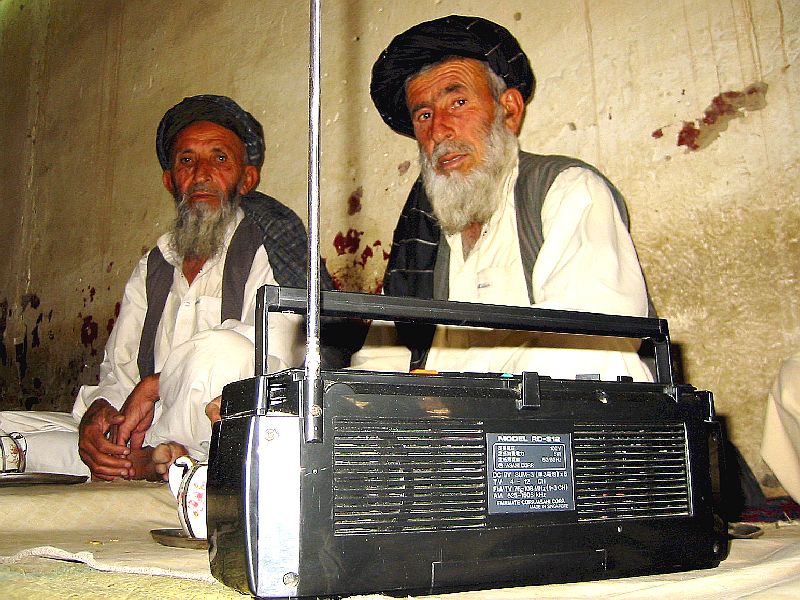
Afghan men at a tea house in the southern Kandahar Province listening to news of the "peace jirga" on August 9


After more than 30 years of war, Afghans now ready to move towards peace


A note from Peter Chamberlin of There is no sunglasses weblog.


The Afghanistan situation is moving rapidly. For the Americans and NATO the end game is beginning as the present chapter heads towards a climax. For Pakistan, Afghanistan and for the region a new chapter seems to be beginning. However, to predict the unfolding situation with any degree of accuracy will be hazardous.
Several important developments have taken place in the past few weeks which seem to reveal some of the complexity of the situation. President Karzai has set up a high peace council to conduct talks with the Taliban. This is the culmination of the Western strategy of the last few years to engage with the so called ‘good’ Taliban. President Karzai has publicly claimed that he himself and his representatives have met some important Taliban leaders. Ex-Mujahideen commander Rabbani, a Tajik, is heading the peace council. The Americans confirm that contacts with senior Taliban leaders have been made.
The conditions laid down by Karzai to the Taliban for reconciliation are: laying down of arms, conduct of talks within the framework of the Afghan Constitution, and severing links with the Al Qaeda. These are sensible conditions. It is, however, not clear which section of the Taliban will come forward for talks by accepting these stipulations. Judging by American statements, talking to Mullah Omar is ruled out as he is still seen as being close to the Al Qaeda. That leaves the Haqqani and Hikmetyar groups. Under the present condition only low level Taliban and warlords may come forward for reconciliation. Whether that will be sufficient for peace remains to be seen.
The July 2011 deadline for the beginning of the drawdown of US troops has created a major confusion. No one seems to be clear what that drawdown will lead to. Bob Woodward’s latest book Obama’s Wars reveals that there are major differences within the Obama administration on how to handle the Afghan war. Civil and military officials are at odds with each other. The National Security Adviser has been changed. In view of these differences it is difficult to say how the Obama administration will act in the future. A US-Pakistan strategic dialogue on 22 October, the forthcoming NATO summit in November, and the outcome of negotiations being undertaken by the Afghan peace council will throw some light on which direction the Afghan situation will move – towards stability or more violence?
Experts are also divided on what will be the US strategy. Many feel that this is the beginning of the US withdrawal from Afghanistan. The domestic situation – poor economic condition, political differences among the Democrats on the conduct of the Afghan war, dwindling public support for the war effort, rising casualties – is compelling Obama to look for an early exit. But, before that happens, a face saving formula will need to be worked out. Getting some Taliban into a power sharing deal is one such option. That is why the US supports, even sponsors, Karzai’s reconciliation efforts. Recent reports suggest that NATO has provided safe passage for Taliban commanders to facilitate negotiations with the Karzai government.
The other stream of expert opinion dismisses any talk of significant US troop withdrawal. According to this analysis, the US has major strategic interests beyond Afghanistan and will seek to increase its influence in Central Asia. It cannot afford to abandon Afghanistan given the rising influence of China and Russia. It will retain a military presence in Afghanistan for a long time to come. The talk of US withdrawal is, therefore, premature.

Search

Custom Search