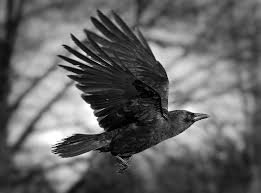
The crow had a key role in the sea trade between Mesopotamia and the Indus Valley, says Dr Manzur Ejaz
OF CROW, OF LOVE & OF HISTORY
Dr. Manzur Ejaz
From time immemorial, legend has it that lovesick girls would wait for the crow to bring the good news of a lover’s arrival. The crow’s chatter on the roof was a sure sign that the lover was on his way. In folk songs like “Ma-ey ni kaag banairay uttay bolia” (O mother, the crow has spoken), and in many other such songs, idioms and parables, the crow plays a central role as the keeper of secrets.
Folk songs, idioms and collective symbols are handed down to us through a history of thousands of years. Many symbols keep traveling through time in different forms with transformed appearances and rearrangement of vocabulary and even with altering accents. For example in the expression, “Kaawañ day aakhay dhor nahiñ marday” (Crows can’t wish that animals die), the word ‘dhor’ for animal has disappeared from our Punjabi vocabulary. But this is the precise reason why this expression is extremely important, because it still remains the only key to certain unsolved historical puzzles. Such expressions are of extreme importance in articulating the people’s history of the Punjab as written history mostly revolves around kings and their priestly class.
The renowned Indian historian D. D. Kosambi has successfully employed old rituals, superstitions, idioms and abandoned vocabulary to reconstruct the mysteries of history. Writing about the Indus Civilization he has also given an explanation of the crow’s assumed character recurring in our folk songs.
Taking Harrapa and Mohenjodaro, as the two highly developed cities of the Indus Civilization, Kosambi states that they were actively engaged in trading with Mesopotamia – another highly developed civilization dating from 5000 BC. The evidence of exchange between these two civilizations comes by the presence of similar seals found in the archaeological remains of both places. The crow played a key role in this sea trade carried on via the island presently known as Bahrain.


